

Reliable land investors helping you sell land fast with zero fees or stress.

Nearby Specialists When You’re Looking to Sell Your Land for Cash





LAND BOUGHT WITH CASH
Why pick All Around Estate?
We’ll give a cash offer for your land, no matter its state, taxes, or condition.
Sell land stress-free: We use escrow, a trusted third party that holds funds and title till closing, ensuring a safe deal for all.
Our promise: We’ll walk you through every step, give regular updates, and stay available via call or video when needed.
Quick Land Sale with Zero Hassle
Just follow our easy 3-step process to begin.

Step 1 - Complete the Form
With your vacant land's details, we'll create an offer with county records, property data, and a comparison with similar properties.

Step 2 - Get an Offer
We'll reach out with an offer. If you're happy with it, we'll forward you a purchase contract for your signature, guiding you through the process.

Get Paid!
After all required documents are signed and notarized, the Escrow Officer will smoothly transfer the payment for your land to you.
We Buy Land for Cash in Any Location
Hear from some of our amazing customers.

Selling my land was easier than I ever imagined. All Around Estates gave me a reasonable offer and handled everything — I didn’t have to lift a finger.
James Fisher
I had a piece of land that I couldn’t manage anymore. All Around Estates gave me a fair cash offer and took the burden off my shoulders. I couldn’t be more grateful.
Kristin Watss
All Around Estates made selling my Land simple and stress-free. Their team was professional, efficient, and fair throughout the process. Highly recommended!
Albert Flores
Sell Land Fast without a Realtor
Compare Prime Land Buyers with a typical experience selling with a realtor.
| * This chart compares the selling process with Prime Land Buyers versus a realtor, assuming you accept Prime's offer for your land. |

|
Realtor |
|---|---|---|
| Zero fees and commissions |

|

|
| No additional expenses |
|
|
| Sell within a few weeks, not months |
|
|
| Sell your land 'as-is' |
|
|
| All back and current taxes paid |
|
|
| A hassle-free sale |
|
|
* This chart compares the selling process with Prime Land Buyers versus a realtor, assuming you accept Prime's offer for your land.

Realtor
Zero fees and commissions
No additional expenses
Sell within a few weeks, not months
Sell your land 'as-is'
All back and current taxes paid
A hassle-free sale


Why Sell to Tennessee Land Buyers Instead of Realtors
Land sales are fundamentally different from house sales in Tennessee. While realtors excel at marketing homes, vacant land requires specialized knowledge of agricultural zoning, conservation easements, and different buyer networks that most residential agents lack.
Speed & Timeline Matters
Tennessee land through realtors averages 6-8 months on market, with many properties sitting unsold for over a year according to regional market data. The Northeast Tennessee Association of REALTORS® reports that "the regional vacant land sales market has been sluggish" in recent years. Cash land buyers close in 3-4 weeks guaranteed.
Real Cost Comparison
• Realtor route: 5.4% commission (Tennessee average) + $2,000-5,000 marketing costs + 6-8 months of property taxes and insurance
• Cash buyers: Zero fees, zero commissions, we cover all closing costs
Land Expertise
Most Tennessee realtors focus on residential properties. Cash land buyers understand timber rights, agricultural exemptions, floodplain restrictions, and county-specific regulations that affect land values across Tennessee's diverse markets from East Tennessee mountains to Middle Tennessee farmland.
Guaranteed vs. Uncertain
Realtor sales depend on buyer financing, surveys, and environmental contingencies. In Tennessee's land market, 25-35% of accepted offers fall through due to financing issues or inspection problems. Cash buyers provide certainty with funds ready to close.
Hassle-Free Process
No weekend showings in remote locations, no negotiations with multiple parties, no waiting for buyer financing approval. We evaluate your Tennessee land remotely using county records and satellite imagery.
Yes, realtors might list your property for a higher price, but after months of carrying costs, Tennessee's 5.4% average commission, and marketing expenses, plus the risk of no sale, cash buyers often provide better net value with guaranteed results in 3-4 weeks.
Types of Tennessee Land We Buy
LAND CASH BUYERS
Tennessee Agricultural/Farmland
We buy all types of Tennessee farmland, including cattle operations in Middle Tennessee, tobacco farms in Robertson and Montgomery counties, and corn and soybean fields throughout the Tennessee River Valley.
Tennessee Recreational Land
From Great Smoky Mountains hunting properties to fishing land along the Tennessee River system, we purchase recreational properties statewide. Popular areas include Cumberland Plateau hunting tracts, Land Between the Lakes access properties, and camping land near state parks and wildlife management areas.
Tennessee Residential Development Land
We purchase development parcels in growing areas like Williamson County, Rutherford County, and around Nashville's expanding suburbs.
Tennessee Timber/Forest Land
We actively buy timber properties from native hardwood forests on the Cumberland Plateau to mixed pine-hardwood stands throughout the state.
Tennessee Waterfront Properties
We purchase lake properties on all major Tennessee lakes including Norris Lake, Cherokee Lake, and Watts Bar Lake, plus Tennessee River frontage and creek properties throughout the state.

How to Sell Land in Tennessee: 3 Ways
When you need to sell land in Tennessee, you have three main options. Each method has different timelines, costs, and levels of complexity.
Method 1: Traditional Realtor (6+ months)
Tennessee realtors typically charge 5.42% commission for residential properties, but land sales often command higher rates of 6-10% due to specialized marketing needs. Most agents focus on houses and may lack knowledge of Tennessee's Greenbelt classifications, agricultural regulations, cost of land in TN, and zoning laws. Land sales through realtors can take 6 months or longer, with many properties sitting on the market for over a year according to regional market data.
Method 2: For Sale By Owner - FSBO (3-12 months)
Selling land by owner in Tennessee saves commission fees but requires handling complex paperwork, including deed transfers, title searches, and compliance with Tennessee's property disclosure requirements. You'll also need to market the property, understand Tennessee trends in the land market, qualify potential buyers, and navigate county-specific regulations yourself.
Method 3: Cash Land Buyers (3-4 weeks) ✓ FASTEST
Tennessee cash land buyers like Prime Land Buyers purchase directly with no commissions, no fees, and no financing delays. We handle all paperwork, closing costs, and legal requirements. According to Tennessee Land Market Insights, properties in fast-moving counties like Trousdale can turn over quickly, and we close most transactions within 3-4 weeks statewide.
Ready to sell your Tennessee land fast? Skip the hassle of lengthy market times and commission fees. Get your cash offer today from Tennessee's trusted land buyers with hundreds of successful transactions across the Volunteer State.
What Documents Do You Need to Sell Land in Tennessee?
Don't worry about gathering every document - we'll help you obtain anything that's missing. Here's what's typically needed for Tennessee land sales.
Essential Documents:
• Property deed or warranty deed showing current ownership
• Recent property tax statements (last 2 years preferred)
• Survey or legal property description with parcel ID
• Current property tax assessment records
• Tennessee Realty Transfer Recordation Tax forms (completed at closing)
Helpful But Not Required:
• Previous appraisals or land valuations
• Environmental assessments or soil tests
• Current zoning information from county
• Utility availability documentation
• Photos of the property boundaries
Tennessee-Specific Requirements:
• Tennessee Property Disclosure Statement (if residential land or improved property)
• Greenbelt classification documentation (if enrolled in agricultural, forest, or open space programs)
• Transfer tax calculation at $0.37 per $100 of sale price
• Title search showing clear ownership chain
Missing Documents? No Problem.
Don't have all the paperwork? We work with Tennessee title companies and county Register of Deeds offices daily to obtain missing documents. Our team can help you get copies of deeds, tax records, surveys, Greenbelt applications, and any other required documentation. We handle the transfer tax calculations and all recordation requirements. This service is included at no cost to you.
Ready to get started? Submit your Tennessee property details today - we'll handle all the paperwork headaches and ensure compliance with state requirements for you.

Your Path to Passive Income
They will teach you the best strategies, tools, and tips to find profitable niches, create engaging content, generate traffic, and convert visitors into buyers.
Frequently Asked Questions
Everything you need to know about working with All Aroun
How quickly can I sell my land to All Around Estate?
We typically make offers within 24-48 hours, and closings can happen in as little as 7 days depending on your situation.
Do I need to pay any fees or commissions?
No, we cover all closing costs and there are no hidden fees or agent commissions involved.
What types of land do you buy?
We buy vacant lots, rural land, residential plots, commercial parcels — in any condition and any location.
What if my land has back taxes or legal issues?
No problem! We buy land even with back taxes, title issues, or other complications.
Do I need a realtor to sell my land to you?
No agents are needed. We work directly with you, saving you time and commission costs.
Is the sale process safe and secure?
Yes. We use trusted escrow services to ensure all funds and documents are handled securely.
Will I have to sign a long-term contract?
No. There are no long-term obligations or contracts. You’re free to decline the offer if it doesn’t suit you.
How do I get started with All Round Estate?
Simply fill out our short form, and we’ll reach out with a fair cash offer tailored to your land.
We Buy Land in These Counties
Sell Land in TN
Sell land Anderson County, TN
Sell land Bedford County, TN
Sell land Benton County, TN
Sell land Bledsoe County, TN
Sell land Blount County, TN
Sell land Bradley County, TN
Sell land Campbell County, TN
Sell land Cannon County, TN
Sell land Carroll County, TN
Sell land Carter County, TN
Sell land Cheatham County, TN
Sell land Chester County, TN
Sell land Claiborne County, TN
Sell land Clay County, TN
Sell land Cocke County, TN
Sell land Coffee County, TN
Sell land Crockett County, TN
Sell land Cumberland County, TN
Sell land Davidson County, TN
Sell land Decatur County, TN
Sell land Dekalb County, TN
Sell land Dickson County, TN
Sell land Dyer County, TN
Sell land Fayette County, TN
Sell land Fentress County, TN
Sell land Franklin County, TN
Sell land Gibson County, TN
Sell land Giles County, TN
Sell land Grainger County, TN
Sell land Greene County, TN
Sell land Grundy County, TN
Sell land Hamblen County, TN
Sell Land in TN
Sell land Hamilton County, TN
Sell land Hancock County, TN
Sell land Hardeman County, TN
Sell land Hardin County, TN
Sell land Hawkins County, TN
Sell land Haywood County, TN
Sell land Henderson County, TN
Sell land Henry County, TN
Sell land Hickman County, TN
Sell land Houston County, TN
Sell land Humphreys County, TN
Sell land Jackson County, TN
Sell land Jefferson County, TN
Sell land Johnson County, TN
Sell land Knox County, TN
Sell land Lake County, TN
Sell land Lauderdale County, TN
Sell land Lawrence County, TN
Sell land Lewis County, TN
Sell land Lincoln County, TN
Sell land Loudon County, TN
Sell land McMinn County, TN
Sell land McNairy County, TN
Sell land Macon County, TN
Sell land Madison County, TN
Sell land Marion County, TN
Sell land Marshall County, TN
Sell land Maury County, TN
Sell land Meigs County, TN
Sell land Monroe County, TN
Sell land Montgomery County, TN
Sell land Moore County, TN
Sell Land in TN
Sell land Morgan County, TN
Sell land Obion County, TN
Sell land Overton County, TN
Sell land Perry County, TN
Sell land Pickett County, TN
Sell land Polk County, TN
Sell land Putnam County, TN
Sell land Rhea County, TN
Sell land Roane County, TN
Sell land Robertson County, TN
Sell land Rutherford County, TN
Sell land Scott County, TN
Sell land Sequatchie County, TN
Sell land Sevier County, TN
Sell land Shelby County, TN
Sell land Smith County, TN
Sell land Stewart County, TN
Sell land Sullivan County, TN
Sell land Sumner County, TN
Sell land Tipton County, TN
Sell land Trousdale County, TN
Sell land Unicoi County, TN
Sell land Union County, TN
Sell land Van Buren County, TN
Sell land Warren County, TN
Sell land Washington County, TN
Sell land Wayne County, TN
Sell land Weakley County, TN
Sell land White County, TN
Sell land Williamson County, TN
Sell land Wilson County, TN
Our Latest Articles
How to Sell Inherited Land in Michigan: Complete Family Guide
Learning how to sell inherited land in Michigan requires navigating probate court approval, understanding tax advantages like step-up basis, and coordinating with multiple heirs. While the process typically takes 6-8 months through traditional sales, cash buyers can close within weeks once probate clears, making inheritance decisions less stressful during difficult times.
Key Takeaways:
Michigan probate law requires court approval before selling inherited land, adding 30-60 days to your timeline even after finding a buyer.
You'll receive a "stepped-up basis" equal to the land's value at death, potentially eliminating capital gains taxes on inherited property.
Cash buyers can close within 2-3 weeks after probate completion, while traditional sales typically take 6+ additional months.
Quick Note: Prefer a hassle-free sale? We buy Michigan land directly from owners and can give you a free cash offer today. If you want to learn how to sell your inherited land, continue reading!
Understanding Michigan Probate Laws for Inherited Land
Dealing with inherited land in Michigan can feel overwhelming, especially when you're already grieving the loss of a loved one. The good news is that Michigan's probate system is designed to help families navigate this process, though understanding the specific requirements can save you time, money, and stress down the road.
Michigan's Three Probate Pathways
Michigan offers different probate processes depending on your situation:
• Informal Probate - The most common and streamlined option when all heirs agree and there are no disputes
• Formal Probate - Required when there are contested issues, unclear wills, or complex family situations
• Small Estate Process - Available for estates valued under $24,000, though land rarely qualifies due to property values
Most inherited land cases go through informal probate, which typically takes 4-6 months minimum. This process requires court supervision but moves more quickly than formal probate when families cooperate. Understanding all the Michigan land sale legal requirements upfront can help streamline the probate process.
Key Michigan Requirements for Land Inheritance
Before you can sell inherited land, Michigan law requires several critical steps. The probate court must officially transfer the property title from the deceased person's name to the rightful heirs. This involves filing a petition with the probate court in the county where the property is located, not necessarily where the person died.
You'll need to provide a certified death certificate, the original will (if one exists), and a complete inventory of all estate assets, including the land's current market value. Michigan courts also require publication of legal notices to potential creditors, creating a waiting period before final distribution.
Timeline and Personal Representative Duties
The personal representative (called an executor in other states) plays a crucial role in Michigan probate. They're responsible for managing the estate, paying debts, filing tax returns, and ultimately distributing assets to heirs. If you're selling inherited land, the personal representative must obtain court approval before any sale can proceed.
This legal framework protects heirs but can create delays when you need to sell quickly. Understanding these requirements upfront helps you prepare for the journey ahead and consider whether alternative options might better serve your family's needs during this difficult time.
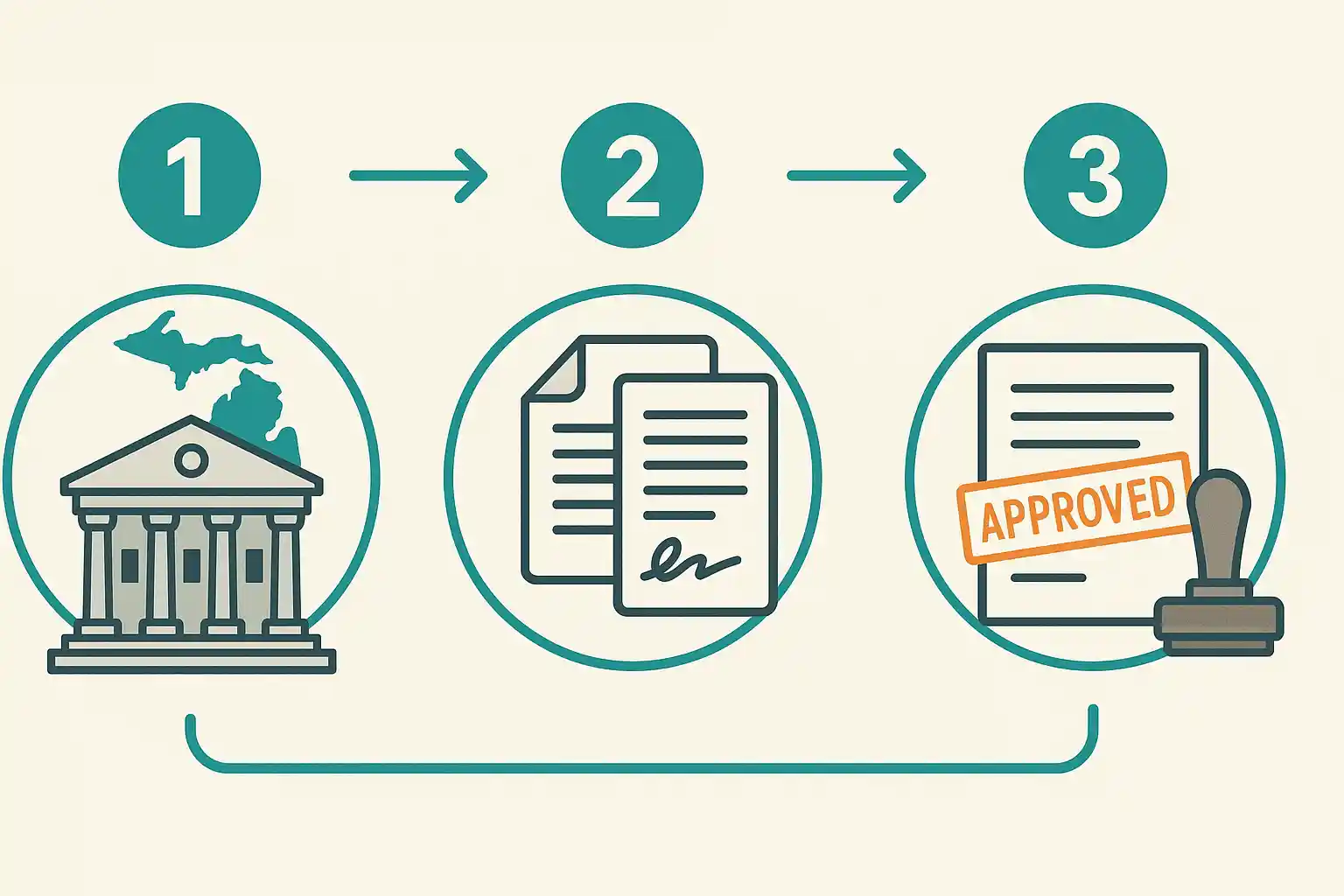
Step-by-Step Process to Sell Inherited Land in Michigan
Selling inherited land in Michigan involves several legal steps that must be completed in the right order. While the process can seem daunting, breaking it down into manageable phases helps you understand what to expect and when you'll be able to move forward with a sale.
Phase 1: Initiate Probate Proceedings
The first crucial step is filing with the appropriate Michigan probate court, which must be done in the county where the deceased owned the land. You'll need to gather several essential documents before heading to court:
Certified death certificate (multiple copies recommended)
Original will and any codicils, if they exist
Complete list of all heirs and their contact information
Property deeds and tax records for the inherited land
Within 14 days of filing, Michigan law requires you to send notice to all interested parties, including heirs, beneficiaries, and creditors. The court will then appoint a personal representative and issue Letters of Authority, which give legal power to manage the estate.
Phase 2: Estate Administration Requirements
Once appointed, the personal representative has specific duties that directly impact when you can sell the land. Michigan probate courts require an inventory of all estate assets, including a professional appraisal of the inherited land, filed within 91 days of appointment.
The personal representative must also publish a notice to creditors in a local newspaper and wait through a four-month creditor claim period. During this time, they'll need to pay valid debts, file final tax returns, and keep detailed records of all estate transactions.
Phase 3: Obtaining Court Approval for Land Sale
Here's where many families encounter unexpected delays. Michigan law specifically requires court approval before any real estate can be sold from an estate. The personal representative must file a "Petition for Approval of Sale of Real Estate" with the probate court, providing details about the proposed sale terms, buyer, and how proceeds will be distributed.
The court reviews the petition to ensure the sale is in the best interest of all heirs and that the price is fair. This process typically adds 30-60 days to your timeline, even after finding a buyer. Only after receiving court approval can the personal representative sign the deed and complete the transfer, usually requiring at least 6-8 months from the initial probate filing.
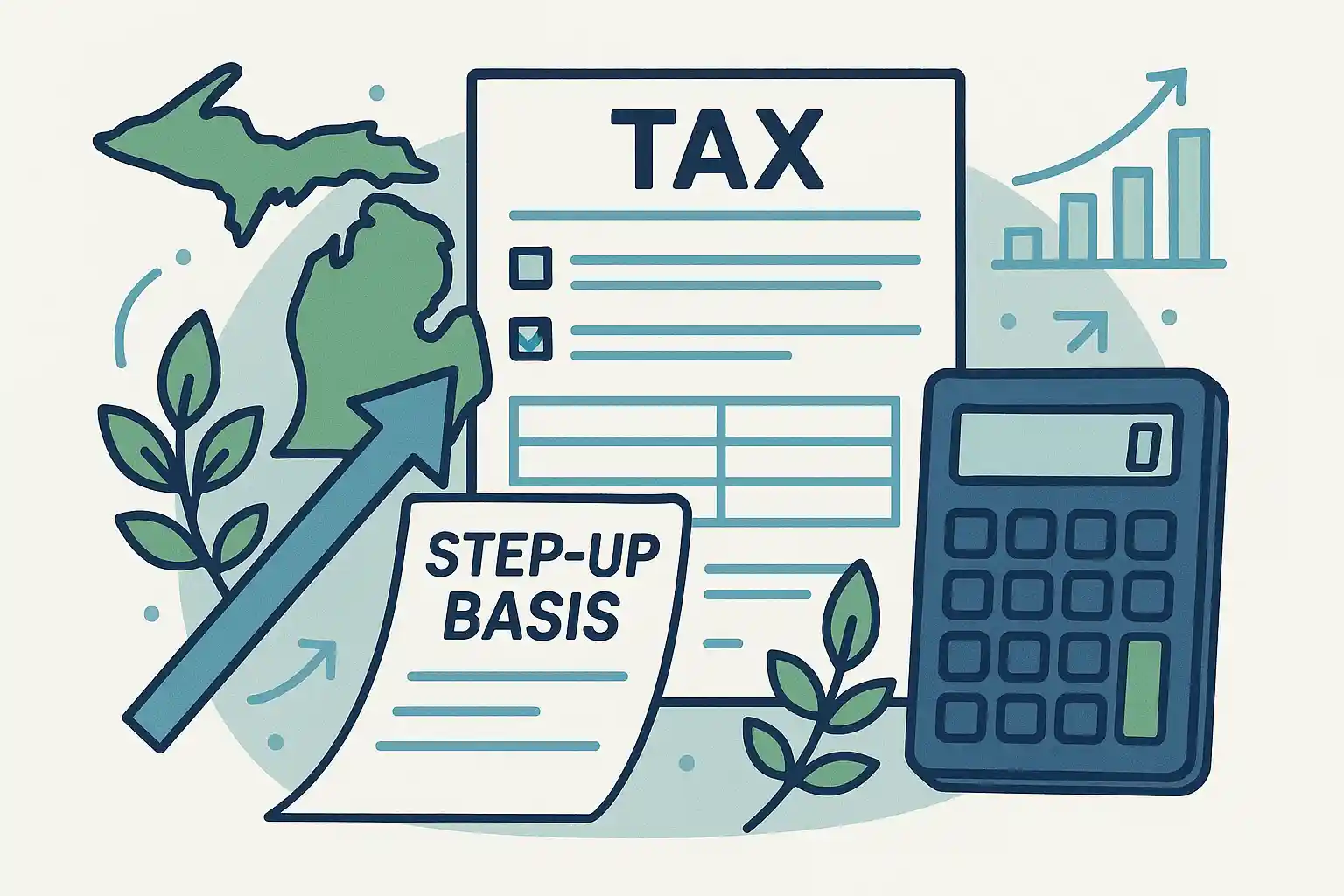
Tax Implications: Step-Up Basis and Capital Gains in Michigan
One of the few silver linings when dealing with inherited land is the significant tax advantage you'll receive. Michigan's tax laws, combined with federal inheritance rules, can save you thousands of dollars compared to if you had purchased the property yourself. Understanding these benefits helps you make informed decisions about timing your sale.
The Step-Up Basis Advantage
When you inherit land in Michigan, you receive what's called a "stepped-up basis" in the property. This means your cost basis for tax purposes becomes the fair market value of the land on the date of the original owner's death, not what they originally paid for it decades ago.
Here's why this matters: if your parents bought land for $20,000 in 1980 and it's now worth $80,000, your tax basis becomes $80,000, not the original purchase price. This can eliminate or dramatically reduce capital gains taxes when you sell.
Michigan's Tax-Friendly Inheritance Laws
Michigan eliminated its state inheritance tax decades ago, which means you won't owe state-level taxes simply for inheriting the land. The state also follows federal tax guidelines for inherited property, creating a consistent framework that's easier to navigate than some other states.
However, you'll still need to consider these potential tax obligations:
Federal capital gains tax - applies if you sell for more than the stepped-up basis value
Michigan income tax - may apply to any gains, though at relatively favorable rates
Property taxes - continue accruing during probate and must be current for sale
Estate taxes - only relevant for very large estates (over $13.61 million in 2024)
Calculating Your Potential Tax Liability
The key to minimizing taxes is getting an accurate appraisal of the land's value as of the date of death. This becomes your new basis, and you'll only owe capital gains taxes on any appreciation that occurs after that date. If you sell quickly after inheriting, there may be little to no taxable gain.
For example, if the land was appraised at $75,000 for probate purposes and you sell for $77,000, you'd only have $2,000 in taxable gain. At current federal capital gains rates, this might result in just $300-400 in additional taxes, depending on your income level.
Professional tax advice becomes crucial if you're dealing with valuable property, multiple heirs, or planning to hold the land for an extended period. A qualified accountant can help you understand timing strategies and ensure you're taking advantage of all available benefits during this already challenging time.

Common Challenges When Selling Inherited Michigan Land
Selling inherited land in Michigan comes with unique obstacles that can catch families off guard, especially during an already emotional time. While every situation is different, understanding these common challenges helps you prepare for potential roadblocks and consider whether traditional selling methods are right for your circumstances.
Property Tax Complications and "Uncapping"
One of the most surprising challenges families face in Michigan involves property tax increases. Under Michigan's Proposal A system, property taxes are "capped" at annual increases, but inheritance can trigger "uncapping," causing taxes to jump significantly when the property transfers ownership.
Michigan law does provide some protection—transfers to spouses and certain family members may qualify for exemptions that prevent uncapping. However, navigating these rules requires careful documentation, and mistakes can be costly. During probate, the personal representative remains responsible for keeping property taxes current, which can strain estate finances if the process drags on for months.
Title and Ownership Issues
Inherited land often comes with clouded title issues that don't surface until you try to sell. These problems are particularly common with land that's been in families for generations:
Missing or improperly recorded deeds from previous transfers
Boundary disputes that weren't resolved when the original owner was alive
Liens or encumbrances that may have been forgotten or overlooked
Survey discrepancies between official records and actual property lines
Michigan's adoption of the Uniform Partition of Heirs Property Act helps protect families from some predatory practices, but resolving title issues still requires time, legal expertise, and often significant expense.
Ongoing Maintenance and Carrying Costs
Empty land might seem low-maintenance, but inherited property can become a financial burden during the lengthy probate process. Property taxes continue to accrue, insurance may be required, and basic maintenance, such as brush clearing or drainage management, falls to the heirs.
In Michigan's climate, seasonal issues can create additional expenses. Fallen trees after storms, erosion problems from spring melts, or the need to maintain access roads can all require immediate attention and unexpected costs.
Market Timing and Buyer Limitations
Even after clearing legal hurdles, selling inherited land in Michigan's rural areas can be challenging. Land values vary significantly across the state, so understanding current Michigan land prices per acre helps set realistic expectations for your inheritance.
Land sales typically take longer than residential properties, and the pool of potential buyers is smaller. Many buyers also require financing, which adds contingencies and possible delays to an already complex process.
The probate timeline rarely aligns with optimal market conditions, potentially forcing sales during unfavorable seasons or economic periods. This timing mismatch can significantly impact the final sale price, affecting how much each heir ultimately receives from the family legacy.
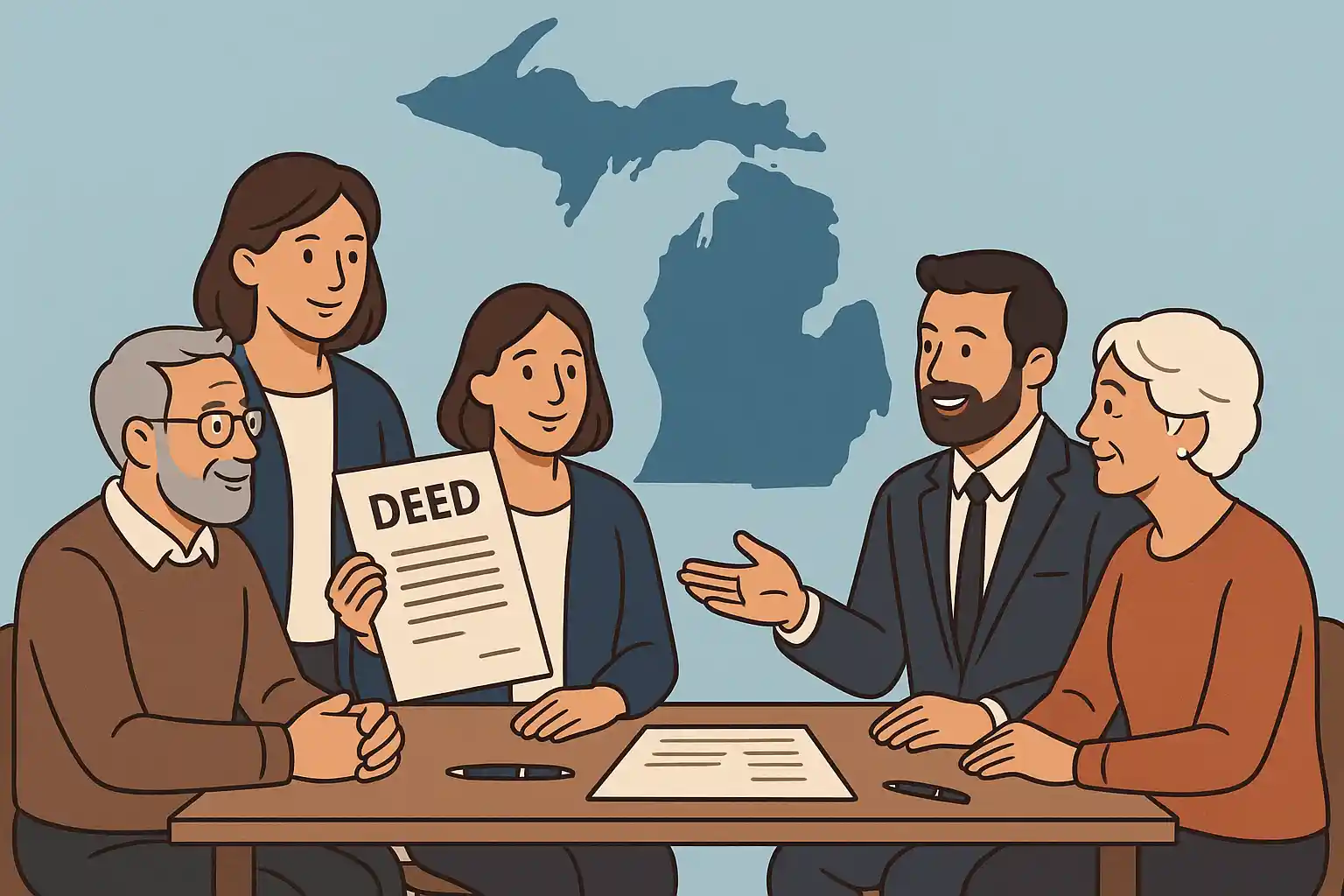
Multiple Heirs: Selling Inherited Michigan Land with Siblings
When multiple family members inherit land together in Michigan, what should be a shared blessing can quickly become a source of stress and conflict. Whether you're dealing with siblings, cousins, or a mix of relatives, coordinating decisions among multiple heirs presents unique challenges that require patience, clear communication, and sometimes legal intervention.
Understanding Tenancy in Common Rights
In Michigan, when multiple people inherit land, they typically become "tenants in common," each owning an undivided fractional interest in the entire property. This means if four siblings inherit 40 acres, each owns 25% of the whole property, not 10 specific acres they can fence off and call their own.
This arrangement creates both rights and responsibilities for each heir:
Equal access to the entire property (unless otherwise agreed)
Shared responsibility for property taxes, maintenance, and insurance
Right to sell their interest (though finding buyers for partial interests is extremely difficult)
Decision-making authority that requires cooperation or majority agreement
Michigan's New Protection for Heirs' Property
Michigan recently enacted the Uniform Partition of Heirs Property Act, which provides important protections for families dealing with inherited land. This law recognizes that forced sales of family property can devastate generational wealth, particularly in communities where land has been passed down through multiple generations.
Under this new protection, if one heir wants to force a sale through partition action, the other heirs have the right of first refusal to buy out the departing family member at fair market value. This prevents outside investors from manipulating family disputes to acquire valuable land at below-market prices.
Common Decision-Making Challenges
Family dynamics that were manageable during Sunday dinners can become contentious when money and property are involved. The most frequent disputes among Michigan heirs include:
Immediate vs. Long-term Perspectives
Some heirs need cash now for personal financial situations
Others want to keep land in the family for future generations
Disagreement over whether to sell quickly or wait for better market conditions
Usage and Maintenance Responsibilities
Who pays for property taxes and upkeep during decision-making periods
Whether family members can use the land for personal activities
How to handle necessary repairs or improvements
Valuation and Sale Terms
Disagreements over asking price or acceptable offers
Different opinions on marketing strategies and timeline
Disputes over who handles negotiations and paperwork
Practical Solutions for Heir Cooperation
Successful heir agreements often involve compromise and clear communication. Many Michigan families find success by appointing one person as the "lead heir" to handle communications with buyers, real estate professionals, and legal representatives, while requiring majority approval for major decisions.
Consider setting deadlines for decision-making to prevent indefinite delays. If the family cannot reach consensus within a reasonable timeframe, sometimes the most practical solution is accepting a cash offer from a buyer who can close quickly, allowing everyone to move forward with their portion of the inheritance and preserve family relationships.

Fast-Track Option: Selling Inherited Michigan Land for Cash
When probate delays, family disagreements, or financial pressures make traditional land sales feel impossible, we offer a streamlined alternative that can resolve complicated inheritance situations quickly and fairly. I've worked with Michigan families who needed certainty and speed during some of the most challenging times in their lives.
Why Our Cash Process Works for Inherited Land
Unlike traditional buyers who need mortgage approval, inspections, and lengthy due diligence periods, we can close deals within weeks rather than months. This speed becomes a lifeline when families are dealing with:
Ongoing property tax bills that keep coming during extended probate periods
Family conflicts where a quick resolution helps preserve relationships
Estate debts that need immediate settlement
Multiple heir situations where everyone wants their inheritance distributed promptly
We also purchase land "as-is," which means you won't need to invest in surveys, environmental assessments, or property improvements before selling. I can't tell you how many families have thanked us for eliminating these upfront costs and uncertainties.
How We Handle the Process
We've designed our process to be as stress-free as possible for grieving families. It starts simple—just submit basic property information online, like the property's location, approximate acreage, and current ownership status.
Within 24-48 hours, I'll personally review your property and provide a fair cash offer based on comparable sales and property records. If our offer works for your family, we handle all the paperwork and coordinate with the probate court to ensure everything transfers properly once the estate is ready.
Why We're Different from Traditional Sales
I've seen too many families get frustrated with traditional real estate transactions that drag on for months. Traditional sales require extensive marketing, multiple showings, buyer financing approval, and numerous contingencies that can cause deals to fall through entirely.
We eliminate these headaches by providing guaranteed closes, covering all transaction costs, and working within your probate timeline. When we buy Michigan land for cash, we're not just purchasing property—we're helping families move forward during difficult transitions.

Tara Reyes

