

Reliable land investors helping you sell land fast with zero fees or stress.

Nearby Specialists When You’re Looking to Sell Your Land for Cash





LAND BOUGHT WITH CASH
Why pick All Around Estate?
We’ll give a cash offer for your land, no matter its state, taxes, or condition.
Sell land stress-free: We use escrow, a trusted third party that holds funds and title till closing, ensuring a safe deal for all.
Our promise: We’ll walk you through every step, give regular updates, and stay available via call or video when needed.

Quick Land Sale with Zero Hassle
Just follow our easy 3-step process to begin.

Step 1 - Complete the Form
With your vacant land's details, we'll create an offer with county records, property data, and a comparison with similar properties.

Step 2 - Get an Offer
We'll reach out with an offer. If you're happy with it, we'll forward you a purchase contract for your signature, guiding you through the process.

Get Paid!
After all required documents are signed and notarized, the Escrow Officer will smoothly transfer the payment for your land to you.
We Buy Land for Cash in Any Location
Hear from some of our amazing customers.

Selling my land was easier than I ever imagined. All Around Estates gave me a reasonable offer and handled everything — I didn’t have to lift a finger.
James Fisher
I had a piece of land that I couldn’t manage anymore. All Around Estates gave me a fair cash offer and took the burden off my shoulders. I couldn’t be more grateful.
Kristin Watss
All Around Estates made selling my Land simple and stress-free. Their team was professional, efficient, and fair throughout the process. Highly recommended!
Albert Flores
Sell Land Fast without a Realtor
Compare Prime Land Buyers with a typical experience selling with a realtor.
| * This chart compares the selling process with Prime Land Buyers versus a realtor, assuming you accept Prime's offer for your land. |

|
Realtor |
|---|---|---|
| Zero fees and commissions |

|

|
| No additional expenses |
|
|
| Sell within a few weeks, not months |
|
|
| Sell your land 'as-is' |
|
|
| All back and current taxes paid |
|
|
| A hassle-free sale |
|
|
* This chart compares the selling process with Prime Land Buyers versus a realtor, assuming you accept Prime's offer for your land.

Realtor
Zero fees and commissions
No additional expenses
Sell within a few weeks, not months
Sell your land 'as-is'
All back and current taxes paid
A hassle-free sale


Why Sell to Tennessee Land Buyers Instead of Realtors
Land sales are fundamentally different from house sales in Tennessee. While realtors excel at marketing homes, vacant land requires specialized knowledge of agricultural zoning, conservation easements, and different buyer networks that most residential agents lack.
Speed & Timeline Matters
Tennessee land through realtors averages 6-8 months on market, with many properties sitting unsold for over a year according to regional market data. The Northeast Tennessee Association of REALTORS® reports that "the regional vacant land sales market has been sluggish" in recent years. Cash land buyers close in 3-4 weeks guaranteed.
Real Cost Comparison
• Realtor route: 5.4% commission (Tennessee average) + $2,000-5,000 marketing costs + 6-8 months of property taxes and insurance
• Cash buyers: Zero fees, zero commissions, we cover all closing costs
Land Expertise
Most Tennessee realtors focus on residential properties. Cash land buyers understand timber rights, agricultural exemptions, floodplain restrictions, and county-specific regulations that affect land values across Tennessee's diverse markets from East Tennessee mountains to Middle Tennessee farmland.
Guaranteed vs. Uncertain
Realtor sales depend on buyer financing, surveys, and environmental contingencies. In Tennessee's land market, 25-35% of accepted offers fall through due to financing issues or inspection problems. Cash buyers provide certainty with funds ready to close.
Hassle-Free Process
No weekend showings in remote locations, no negotiations with multiple parties, no waiting for buyer financing approval. We evaluate your Tennessee land remotely using county records and satellite imagery.
Yes, realtors might list your property for a higher price, but after months of carrying costs, Tennessee's 5.4% average commission, and marketing expenses, plus the risk of no sale, cash buyers often provide better net value with guaranteed results in 3-4 weeks.
Types of Tennessee Land We Buy
LAND CASH BUYERS
Tennessee Agricultural/Farmland
We buy all types of Tennessee farmland, including cattle operations in Middle Tennessee, tobacco farms in Robertson and Montgomery counties, and corn and soybean fields throughout the Tennessee River Valley.
Tennessee Recreational Land
From Great Smoky Mountains hunting properties to fishing land along the Tennessee River system, we purchase recreational properties statewide. Popular areas include Cumberland Plateau hunting tracts, Land Between the Lakes access properties, and camping land near state parks and wildlife management areas.
Tennessee Residential Development Land
We purchase development parcels in growing areas like Williamson County, Rutherford County, and around Nashville's expanding suburbs.
Tennessee Timber/Forest Land
We actively buy timber properties from native hardwood forests on the Cumberland Plateau to mixed pine-hardwood stands throughout the state.
Tennessee Waterfront Properties
We purchase lake properties on all major Tennessee lakes including Norris Lake, Cherokee Lake, and Watts Bar Lake, plus Tennessee River frontage and creek properties throughout the state.

How to Sell Land in Tennessee: 3 Ways
When you need to sell land in Tennessee, you have three main options. Each method has different timelines, costs, and levels of complexity.
Method 1: Traditional Realtor (6+ months)
Tennessee realtors typically charge 5.42% commission for residential properties, but land sales often command higher rates of 6-10% due to specialized marketing needs. Most agents focus on houses and may lack knowledge of Tennessee's Greenbelt classifications, agricultural regulations, cost of land in TN, and zoning laws. Land sales through realtors can take 6 months or longer, with many properties sitting on the market for over a year according to regional market data.
Method 2: For Sale By Owner - FSBO (3-12 months)
Selling land by owner in Tennessee saves commission fees but requires handling complex paperwork, including deed transfers, title searches, and compliance with Tennessee's property disclosure requirements. You'll also need to market the property, understand Tennessee trends in the land market, qualify potential buyers, and navigate county-specific regulations yourself.
Method 3: Cash Land Buyers (3-4 weeks) ✓ FASTEST
Tennessee cash land buyers like Prime Land Buyers purchase directly with no commissions, no fees, and no financing delays. We handle all paperwork, closing costs, and legal requirements. According to Tennessee Land Market Insights, properties in fast-moving counties like Trousdale can turn over quickly, and we close most transactions within 3-4 weeks statewide.
Ready to sell your Tennessee land fast? Skip the hassle of lengthy market times and commission fees. Get your cash offer today from Tennessee's trusted land buyers with hundreds of successful transactions across the Volunteer State.
What Documents Do You Need to Sell Land in Tennessee?
Don't worry about gathering every document - we'll help you obtain anything that's missing. Here's what's typically needed for Tennessee land sales.
Essential Documents:
• Property deed or warranty deed showing current ownership
• Recent property tax statements (last 2 years preferred)
• Survey or legal property description with parcel ID
• Current property tax assessment records
• Tennessee Realty Transfer Recordation Tax forms (completed at closing)
Helpful But Not Required:
• Previous appraisals or land valuations
• Environmental assessments or soil tests
• Current zoning information from county
• Utility availability documentation
• Photos of the property boundaries
Tennessee-Specific Requirements:
• Tennessee Property Disclosure Statement (if residential land or improved property)
• Greenbelt classification documentation (if enrolled in agricultural, forest, or open space programs)
• Transfer tax calculation at $0.37 per $100 of sale price
• Title search showing clear ownership chain
Missing Documents? No Problem.
Don't have all the paperwork? We work with Tennessee title companies and county Register of Deeds offices daily to obtain missing documents. Our team can help you get copies of deeds, tax records, surveys, Greenbelt applications, and any other required documentation. We handle the transfer tax calculations and all recordation requirements. This service is included at no cost to you.
Ready to get started? Submit your Tennessee property details today - we'll handle all the paperwork headaches and ensure compliance with state requirements for you.

Your Path to Passive Income
They will teach you the best strategies, tools, and tips to find profitable niches, create engaging content, generate traffic, and convert visitors into buyers.
Frequently Asked Questions
Everything you need to know about working with All Aroun
How quickly can I sell my land to All Around Estate?
We typically make offers within 24-48 hours, and closings can happen in as little as 7 days depending on your situation.
Do I need to pay any fees or commissions?
No, we cover all closing costs and there are no hidden fees or agent commissions involved.
What types of land do you buy?
We buy vacant lots, rural land, residential plots, commercial parcels — in any condition and any location.
What if my land has back taxes or legal issues?
No problem! We buy land even with back taxes, title issues, or other complications.
Do I need a realtor to sell my land to you?
No agents are needed. We work directly with you, saving you time and commission costs.
Is the sale process safe and secure?
Yes. We use trusted escrow services to ensure all funds and documents are handled securely.
Will I have to sign a long-term contract?
No. There are no long-term obligations or contracts. You’re free to decline the offer if it doesn’t suit you.
How do I get started with All Round Estate?
Simply fill out our short form, and we’ll reach out with a fair cash offer tailored to your land.
We Buy Land in These Counties
Sell Land in TN
Sell land Anderson County, TN
Sell land Bedford County, TN
Sell land Benton County, TN
Sell land Bledsoe County, TN
Sell land Blount County, TN
Sell land Bradley County, TN
Sell land Campbell County, TN
Sell land Cannon County, TN
Sell land Carroll County, TN
Sell land Carter County, TN
Sell land Cheatham County, TN
Sell land Chester County, TN
Sell land Claiborne County, TN
Sell land Clay County, TN
Sell land Cocke County, TN
Sell land Coffee County, TN
Sell land Crockett County, TN
Sell land Cumberland County, TN
Sell land Davidson County, TN
Sell land Decatur County, TN
Sell land Dekalb County, TN
Sell land Dickson County, TN
Sell land Dyer County, TN
Sell land Fayette County, TN
Sell land Fentress County, TN
Sell land Franklin County, TN
Sell land Gibson County, TN
Sell land Giles County, TN
Sell land Grainger County, TN
Sell land Greene County, TN
Sell land Grundy County, TN
Sell land Hamblen County, TN
Sell Land in TN
Sell land Hamilton County, TN
Sell land Hancock County, TN
Sell land Hardeman County, TN
Sell land Hardin County, TN
Sell land Hawkins County, TN
Sell land Haywood County, TN
Sell land Henderson County, TN
Sell land Henry County, TN
Sell land Hickman County, TN
Sell land Houston County, TN
Sell land Humphreys County, TN
Sell land Jackson County, TN
Sell land Jefferson County, TN
Sell land Johnson County, TN
Sell land Knox County, TN
Sell land Lake County, TN
Sell land Lauderdale County, TN
Sell land Lawrence County, TN
Sell land Lewis County, TN
Sell land Lincoln County, TN
Sell land Loudon County, TN
Sell land McMinn County, TN
Sell land McNairy County, TN
Sell land Macon County, TN
Sell land Madison County, TN
Sell land Marion County, TN
Sell land Marshall County, TN
Sell land Maury County, TN
Sell land Meigs County, TN
Sell land Monroe County, TN
Sell land Montgomery County, TN
Sell land Moore County, TN
Sell Land in TN
Sell land Morgan County, TN
Sell land Obion County, TN
Sell land Overton County, TN
Sell land Perry County, TN
Sell land Pickett County, TN
Sell land Polk County, TN
Sell land Putnam County, TN
Sell land Rhea County, TN
Sell land Roane County, TN
Sell land Robertson County, TN
Sell land Rutherford County, TN
Sell land Scott County, TN
Sell land Sequatchie County, TN
Sell land Sevier County, TN
Sell land Shelby County, TN
Sell land Smith County, TN
Sell land Stewart County, TN
Sell land Sullivan County, TN
Sell land Sumner County, TN
Sell land Tipton County, TN
Sell land Trousdale County, TN
Sell land Unicoi County, TN
Sell land Union County, TN
Sell land Van Buren County, TN
Sell land Warren County, TN
Sell land Washington County, TN
Sell land Wayne County, TN
Sell land Weakley County, TN
Sell land White County, TN
Sell land Williamson County, TN
Sell land Wilson County, TN
Our Latest Articles
Michigan Land Sale Requirements: Paperwork, Taxes & Legal Issues
Documents for selling land by owner in Michigan include essential deeds, title paperwork, Form 2766 Property Transfer Affidavit, purchase agreements, disclosure statements, and closing documentation. While the process involves complex legal requirements and potential costly mistakes, understanding these documents helps you navigate Michigan's strict compliance standards and avoid expensive errors.
Key Takeaways
Michigan requires specific deed formats, notarization standards, and Form 2766 Property Transfer Affidavit with exact transfer tax calculations of $3.75 per $500 of property value.
FSBO sellers must navigate purchase agreements, disclosure obligations, title searches, and closing documentation that often overwhelms property owners with legal complexity.
Professional cash buyers eliminate all paperwork risks, legal compliance burdens, and documentation mistakes while providing guaranteed closings and full legal protection.
Essential Legal Documents for Michigan Land Sales
Selling land by owner in Michigan requires careful attention to numerous legal documents that protect both buyer and seller throughout the transaction. Understanding these essential paperwork requirements helps ensure compliance with Michigan law while avoiding costly delays or legal complications.
Michigan Deed Requirements
The deed forms the foundation of any land sale. The state requires a properly executed warranty deed or quitclaim deed that includes the legal description, grantor and grantee information, and consideration paid. Michigan law mandates that all deeds must be signed, witnessed, and notarized before recording with the county Register of Deeds office. The deed must also include a completed Real Estate Transfer Tax Statement (Form 2766) calculating the state transfer tax of $3.75 per $500 of property value.
Title Documentation
The title represents another critical component that many FSBO sellers underestimate. A comprehensive title search through Michigan's county records system reveals any liens, judgments, or encumbrances affecting the property. Title insurance policies protect against undiscovered defects, while an abstract of title provides the complete ownership history. Michigan courts have consistently held sellers liable for undisclosed title defects, making professional title examination essential.
Property Survey and Legal Description
These documents must accurately identify boundaries and easements. Michigan requires surveys to meet specific state standards, including permanent monuments and detailed measurements. A current survey protects against boundary disputes and ensures accurate property descriptions in the deed. The legal description must match county records exactly, as discrepancies can invalidate the entire transaction.
Tax and Assessment Records
Michigan law requires current property tax payments and special assessment disclosure. Sellers must provide tax statements showing all payments current, plus documentation of any pending assessments or tax tribunal appeals. Property tax prorations at closing must follow Michigan's specific calculation methods.
Environmental and Disclosure Documents
These documents may include wetland determinations, septic system inspections, or hazardous material assessments, depending on property type. While Michigan's Seller Disclosure Act primarily applies to residential properties, vacant land sales often trigger additional environmental review requirements.
The complexity of these legal requirements explains why many landowners choose to work with Michigan cash land buyers who handle all documentation professionally, ensuring full legal compliance while eliminating the risk of costly mistakes.
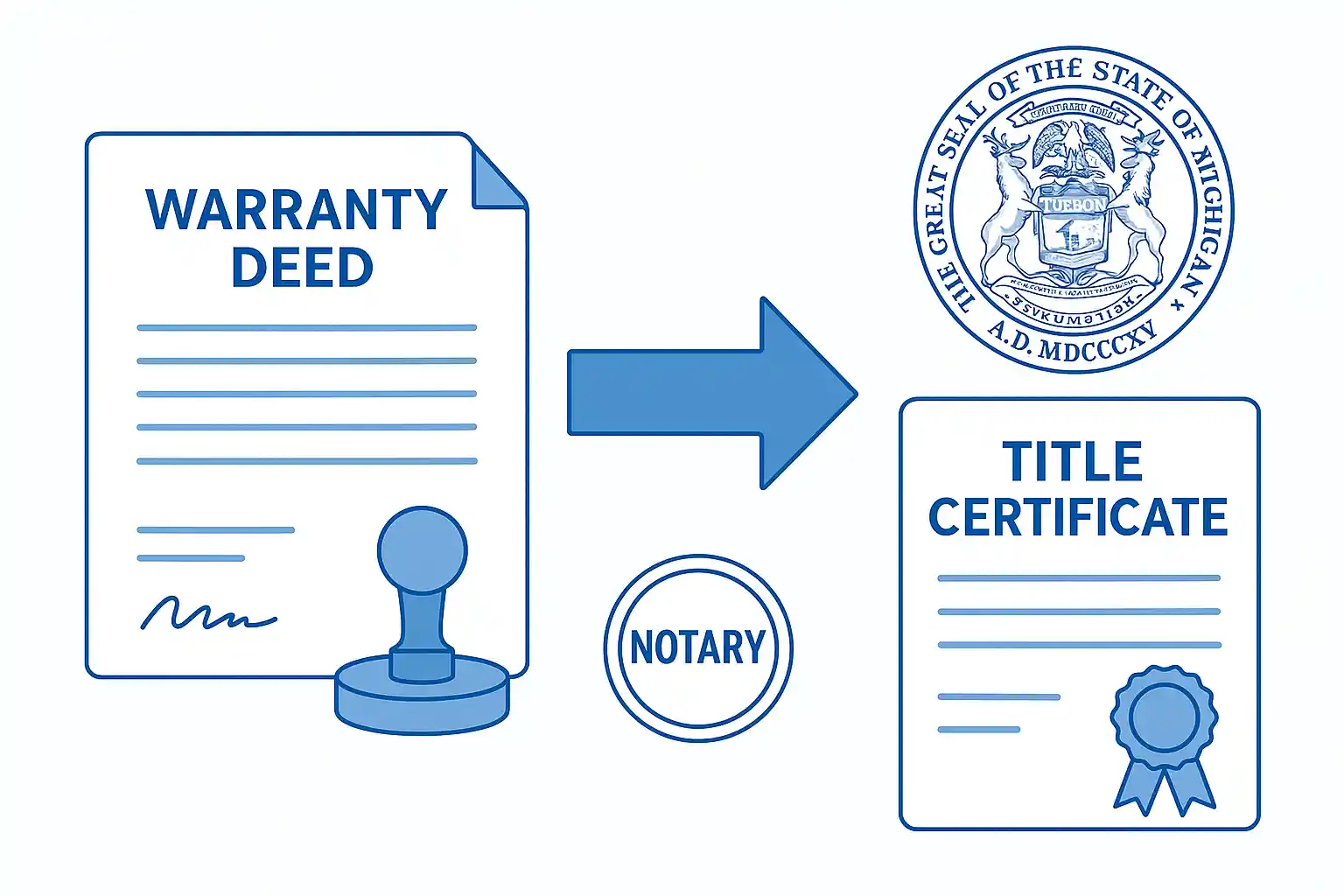
Michigan Deed Requirements and Title Transfer Process
Transferring land ownership in Michigan involves specific legal procedures that must be followed precisely to ensure a valid title transfer. Understanding these requirements helps FSBO sellers navigate the complex documentation process while avoiding potential legal challenges.
Michigan Deed Types and Requirements
Michigan recognizes several deed types for land transfers, each offering different levels of protection:
• Warranty Deed: Provides the strongest buyer protection with full title guarantees
• Quitclaim Deed: Transfers only the seller's current interest without warranties
• Special Warranty Deed: Limited guarantees covering only the seller's ownership period
All Michigan deeds must include essential elements mandated by state law. The document requires the grantor and grantee's full legal names, complete property legal description matching county records, and consideration amount. Michigan law requires original signatures with printed names beneath, proper notarization with acknowledgment, and a 2.5-inch top margin on the first page for recording purposes.
Recording and Transfer Tax Process
Form 2766 Property Transfer Affidavit must accompany every land transfer in Michigan, regardless of whether a deed is recorded. This critical document calculates the state real estate transfer tax at $3.75 per $500 of property value. The form requires detailed information about both parties, the sale price, the property description, and the transfer circumstances.
County recording fees vary across Michigan but typically range from $10 to $30 for the first page plus additional fees for subsequent pages. Many counties now offer electronic recording systems that can expedite the process, though original signatures remain mandatory for most deed types.
Title Search and Insurance Considerations
Professional title searches examine Michigan's county records to identify any liens, judgments, or encumbrances affecting the property. This process typically costs $200-500 but protects against significant financial liability from undiscovered title defects.
Michigan title insurance policies provide one-time protection against title problems not revealed in public records. While not legally required, most buyers and lenders demand title insurance coverage, making it practically essential for successful land sales.
The complexity of Michigan's deed requirements and title transfer process often overwhelms FSBO sellers. Working with experienced professionals eliminates these documentation challenges, as professionals handle all legal compliance requirements and ensure error-free title transfers.
Purchase Agreements and Contracts for Michigan Land
Creating a legally binding purchase agreement for Michigan land requires careful attention to state-specific requirements and essential contract provisions. FSBO sellers must understand these critical elements to protect their interests and ensure enforceable transactions.
Essential Contract Components
Michigan purchase agreements must include specific elements to create valid, enforceable contracts. The document requires complete identification of both parties with full legal names and addresses, accurate property legal description matching county records, and clear purchase price terms including payment methods, cost of your Michigan land, and financing arrangements.
Key provisions every Michigan land purchase agreement needs:
• Property boundaries and included improvements or fixtures
• Closing date and location specifications
• Title requirements and who pays for title insurance
• Property tax proration calculations and responsibility
• Default remedies and liquidated damages clauses
The purchase price section demands particular attention in land transactions. Unlike residential sales, vacant land often involves creative financing arrangements, mineral rights considerations, or development restrictions that require detailed contractual language.
Contingency Clauses and Timeline Management
Common contingencies in Michigan land sales protect both buyers and sellers by establishing specific conditions that must be met before closing. Financing contingencies typically allow 30-45 days for buyer loan approval, while inspection periods for environmental assessments or surveys generally range from 10-21 days.
Due diligence periods give buyers time to verify zoning compliance, access rights, and utility availability. Michigan law doesn't mandate specific contingency timeframes, making proper deadline management crucial for successful transactions. Missing contingency deadlines can result in contract termination or breach of contract claims.
Earnest Money and Default Provisions
While Michigan doesn't legally require earnest money deposits, they're practically essential for demonstrating buyer commitment. Typical deposits range from 1-5% of the purchase price, held in escrow until closing. The purchase agreement must specify who holds deposits and under what conditions they're refundable or forfeited.
Default provisions require careful drafting to protect seller interests while remaining legally enforceable. Michigan courts scrutinize liquidated damages clauses, requiring them to represent reasonable estimates of actual damages rather than penalties.
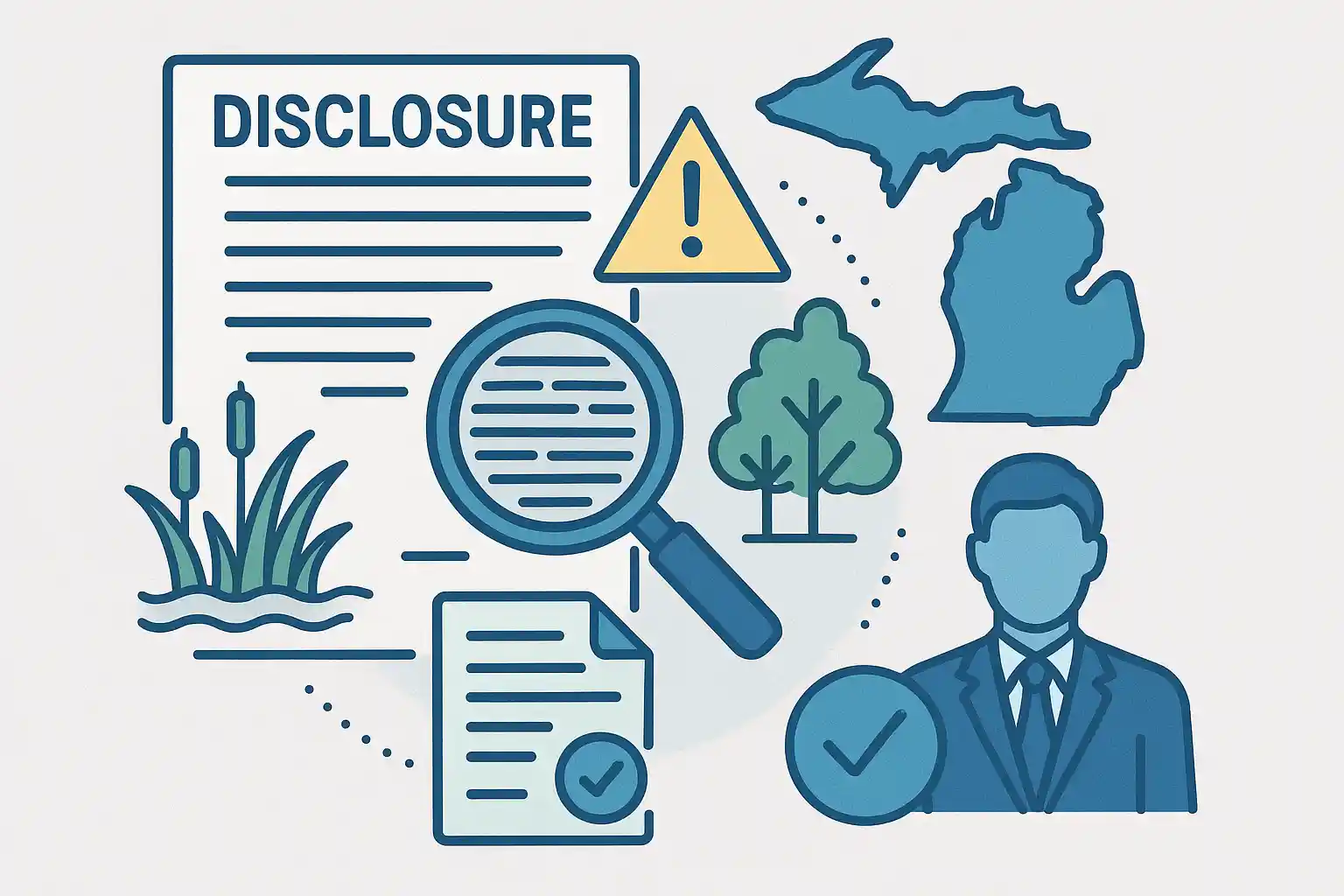
Michigan Disclosure Requirements and Legal Obligations
Michigan's disclosure laws for land sales create specific obligations that FSBO sellers must understand to avoid legal liability. While vacant land transactions face fewer disclosure requirements than residential properties, important obligations still apply, for example when selling Michigan recreational land, that can significantly impact the sale process.
Understanding Michigan's Seller Disclosure Act
Michigan's Seller Disclosure Act primarily applies to residential properties, but certain provisions extend to land transactions involving improvements or specific conditions. When selling vacant land, sellers aren't typically required to complete the standard residential disclosure form. Still, they remain legally obligated to disclose any known material defects or conditions that could affect the property's value or intended use.
The Act requires explicit disclosure of property tax obligations, as Michigan law states that "real property tax obligations can change significantly when property is transferred." This warning must appear in all property transfer documents and alert buyers to potential assessment increases following ownership changes.
Mandatory Disclosure Categories for Land Sales
Environmental and regulatory disclosures represent the most critical area for Michigan land transactions. Sellers must disclose known environmental hazards, contamination issues, or regulatory violations affecting the property.
Key disclosure areas for Michigan land sales include:
• Wetland locations and protection requirements under Part 303 of NREPA
• Known soil contamination or environmental remediation obligations
• Flood zone designations and drainage issues
• Zoning violations or non-conforming use situations
• Utility availability and connection costs
Mineral Rights and Access Considerations
Michigan law requires disclosure of severed mineral rights, as these can be sold separately from surface rights. Sellers must inform buyers whether mineral rights are conveyed with the property or remain with previous owners or third parties. This disclosure prevents future disputes when mining companies exercise subsurface rights.
Access rights and easements demand careful attention in land transactions. Sellers must disclose existing easements, right-of-way agreements, or access limitations that could affect the buyer's intended property use. Michigan courts have held sellers liable for failing to disclose access restrictions that substantially impact property value.
Property Tax and Assessment Obligations
Property transfer triggers potential reassessment under Michigan's uncapping provisions. While specific tax amounts can't be predicted, sellers must warn buyers that assessed values may increase significantly after transfer, particularly for properties held long-term with capped assessments.
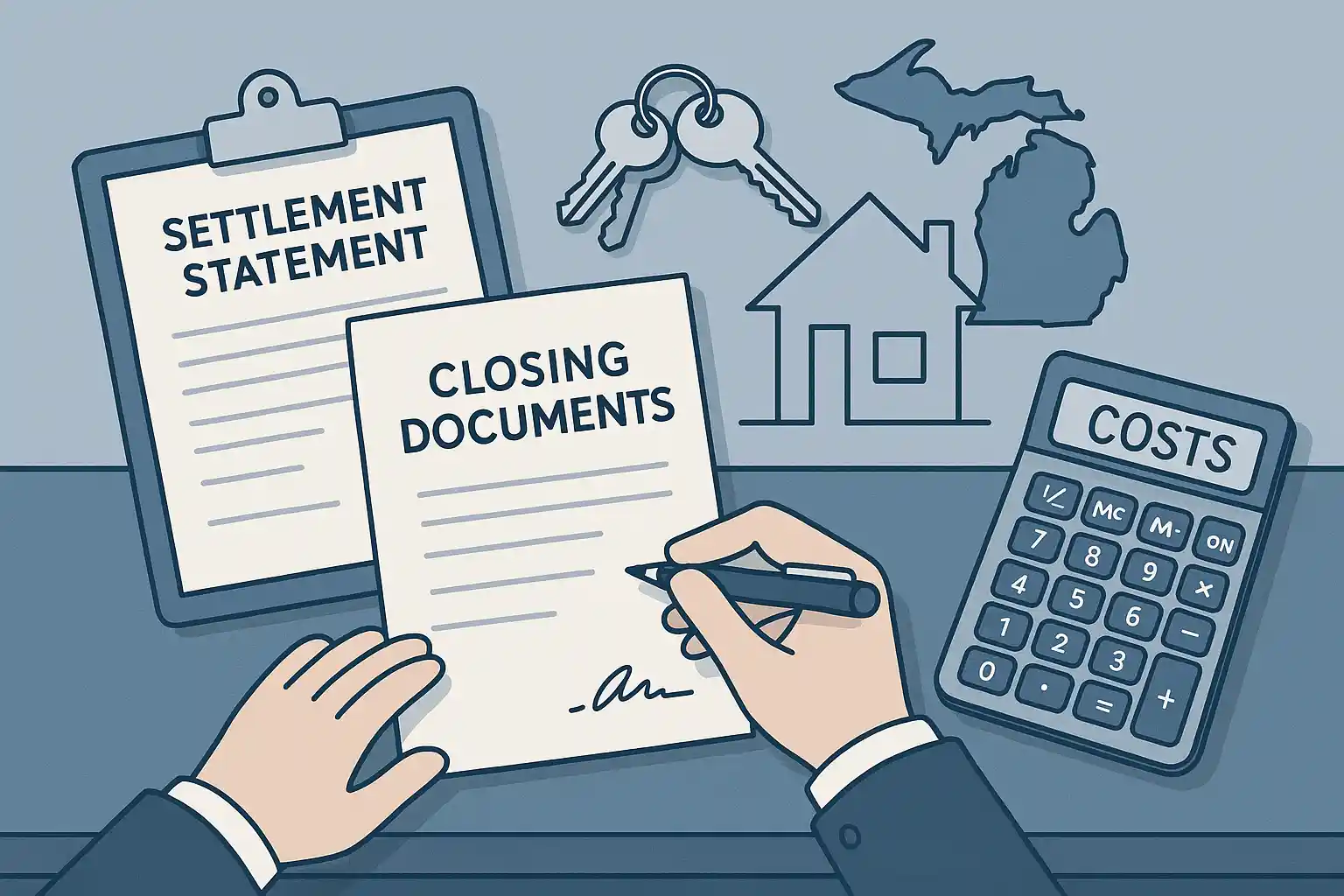
Closing Documentation and Final Paperwork in Michigan
The closing process for Michigan land sales involves extensive documentation that must be completed accurately to finalize the property transfer. Understanding these requirements helps FSBO sellers prepare for the complex paperwork demands of closing day.
Settlement Statement Requirements
Michigan land closings require comprehensive settlement statements that itemize all financial aspects of the transaction. While residential sales typically use HUD-1 Settlement Statements or Closing Disclosure forms, land transactions often utilize customized settlement statements prepared by title companies or closing attorneys.
The settlement statement must accurately reflect all agreed-upon terms from the purchase agreement, including purchase price, earnest money credits, and closing cost allocations. Michigan law requires specific calculations for property tax prorations, which follow the state's Property Tax Act provisions. Property taxes are typically prorated based on the tax year, with sellers responsible for their ownership period and buyers assuming responsibility from the closing date forward.
Required Closing Documents
Essential documents for Michigan land closing include:
• Executed warranty deed or quitclaim deed with proper legal description
• Title insurance policy and commitment letters
• Settlement statement with all financial calculations
• Form 2766 Property Transfer Affidavit for state transfer tax
• Survey documents and property boundary certificates
• Lien releases and payoff statements for existing encumbrances
Notarization and Recording Process
Michigan requires all deed transfers to include proper notarization with acknowledgment statements. The notary must verify the grantor's identity and witness the signature on the closing date. Documents executed in Michigan after 1997 must meet specific formatting requirements, including a 2.5-inch top margin on the first page and adequate space for recording stamps.
The completed deed and Form 2766 must be recorded with the county Register of Deeds office within a reasonable time after closing. Recording fees vary by county but typically range from $10 to $30 for the first page plus additional fees for multiple pages. Electronic recording is available in many Michigan counties, though original signatures remain mandatory.
Final Financial Calculations
Property tax prorations represent one of the most complex aspects of Michigan closings. The state requires specific proration methods that may differ from other states, particularly regarding summer tax bills and winter tax calculations. Title companies typically handle these calculations, but FSBO sellers must understand the process to verify accuracy.
Transfer tax calculations must be precise, as Michigan imposes penalties for underpayment. The state transfer tax of $3.75 per $500 of value requires exact calculation, with additional county transfer taxes varying by location.
Avoiding Legal Pitfalls: How Prime Land Buyers Handle All Paperwork
The complexity of Michigan's legal documentation requirements creates significant risks for FSBO land sellers. Understanding these challenges helps explain why many property owners choose professional land cash buyers who eliminate documentation burdens and legal compliance concerns.
The Hidden Costs of DIY Legal Documentation
Michigan FSBO sellers face substantial financial exposure from documentation errors that aren't immediately apparent. A recent survey found that 10% of FSBO sellers struggle with required paperwork, with mistakes often leading to costly legal disputes or transaction failures.
Common expensive errors include improperly executed deeds that fail to transfer clear title, incorrectly calculated transfer taxes resulting in state penalties, and missing disclosure requirements that create ongoing liability. Attorney fees for correcting these mistakes typically range from $2,500-$7,500, often exceeding the commission savings FSBO sellers hoped to achieve.
Professional Legal Requirements and Time Investment
Essential professional services for compliant Michigan land sales include:
• Real estate attorney consultation and document review ($1,500-$3,000)
• Title company services and title insurance ($800-$1,500)
• Survey and boundary verification ($500-$2,000)
• Environmental assessments when required ($1,000-$5,000)
• Closing coordination and document preparation ($500-$1,200)
The time investment proves equally demanding. FSBO sellers typically spend 40-60 hours managing documentation, coordinating with multiple professionals, and ensuring compliance with Michigan's complex requirements. This substantial time commitment often overwhelms busy property owners already dealing with their primary occupations and responsibilities.
Legal requirements become even more complex when dealing with inherited property. If you've inherited land in Michigan, you'll face additional probate court requirements, multiple heir considerations, and specific tax implications. Our comprehensive guide on how to sell inherited land in Michigan covers the unique documentation and legal steps required for estate property sales.
Why Cash Buyers Eliminate These Challenges
At Prime Land buyers, we help landowners eliminate all documentation risks and time demands for sellers.
We maintain relationships with experienced Michigan real estate attorneys, title companies, and closing professionals who understand state-specific requirements. This network ensures proper handling of all legal documentation while protecting sellers from potential liability exposure.
The Prime Land Buyers Advantage
Prime Land Buyers transforms the complex documentation process into a simple, hassle-free experience. Their team handles all legal paperwork, coordinates with title companies, and ensures full compliance with Michigan requirements. Sellers receive guaranteed cash offers without fees, commissions, or documentation responsibilities.
The company's mission of making land sales "fast, simple, and hassle-free" directly addresses the documentation challenges that overwhelm FSBO sellers. With over 62 landowners receiving cash offers weekly and a 5-star rating from 40+ reviews, Prime Land Buyers demonstrates the value of professional documentation handling.
Ready to skip the paperwork headaches? Get a cash offer for your Michigan land today and let Michigan's trusted land buying professionals handle all legal documentation while you focus on your next chapter.

Emma Dozema

